
Industry: Financial Services, Technology
Role: Sales & Marketing
Organization: Public, Private Equity, Private
The path to the CMO seat rarely follows a straight line. Some leaders build their readiness through product marketing, brand, communications, or commercial experience. Others build it through the less visible work of earning trust, influencing senior stakeholders, and learning when to push, when to listen, when to build consensus, and when to move.
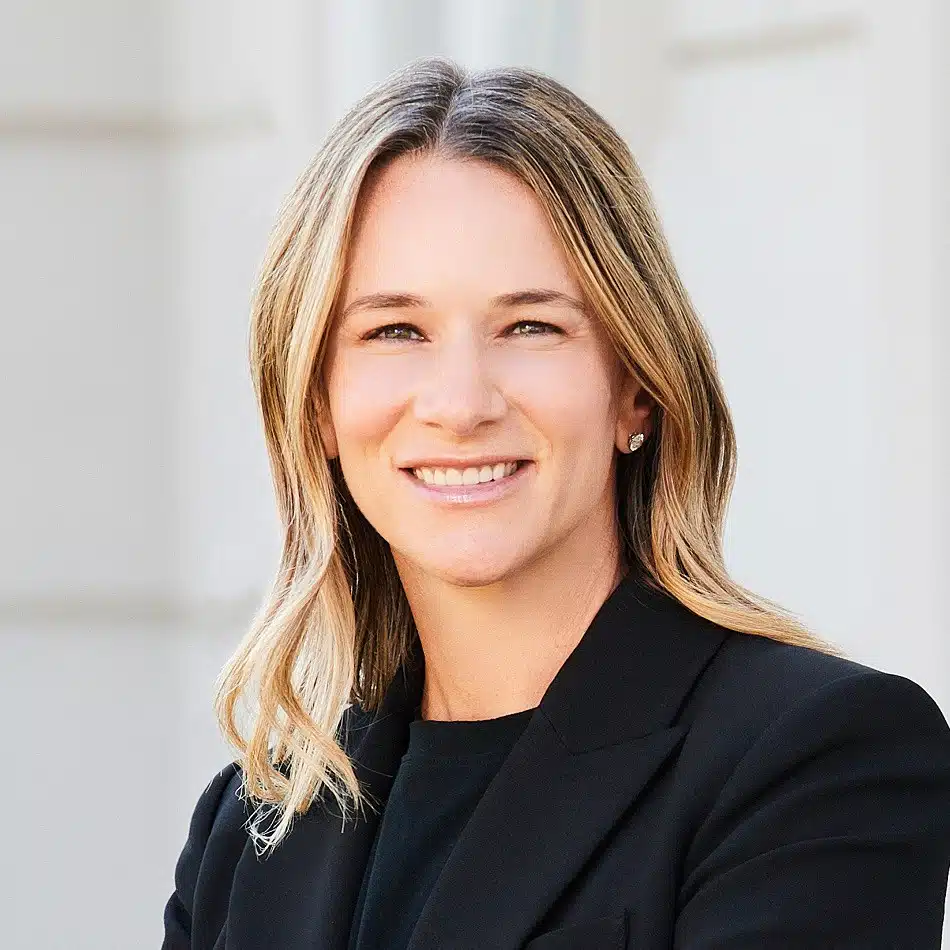
For Katy Fitzpatrick, Chief Marketing Officer at Solomon Partners, that readiness was tested in her move from J.P. Morgan to a partner-led advisory firm. In that setting, the CMO role is not limited to campaigns or brand stewardship. It requires building credibility across the firm, shaping how partners tell the story of the business, and creating a marketing function that can keep pace with growth.
Kate Gerard, Principal in JM Search’s Financial Services and Marketing Practice, recently spoke with Katy about her move to Solomon, the mindset shift required to lead as a first-time CMO, and what future marketing leaders should understand before taking the leap.
What CMO Readiness Looks Like
Kate: For many marketing leaders, the move into a first-time CMO role requires a shift from leading within a function to owning the direction of one. When the Solomon Partners opportunity first came up, you were leaving a firm with enormous brand recognition for a role where the CMO was expected to help build the brand in a much more hands-on way.
What was your initial reaction? Confidence, hesitation, or some mix of both?
Katy: It was definitely a mix. As a marketer, you are excited about the prospect of a CMO role as part of your career path. At the same time, I had been at J.P. Morgan for 14 years – a great firm where I had access to resources and a strong support system. Taking on the CMO role at Solomon, I knew I would be starting over from scratch.
As I further evaluated the opportunity, I felt ready to take that next step. The more people I met throughout the process, I realized that Solomon would be a great place to become a first-time CMO. The COO, whom I would report to, was incredibly supportive throughout the process, and I felt I would be able to learn a lot from her as I settled into the role. Sometimes you have to take that leap in your career.
Kate: What were the signals, looking back, that you were ready to move from senior marketing leader to CMO?
Katy: A big part of it came after I moved from corporate marketing into line-of-business marketing. That is where I really honed my product marketing skill set, covering the investment banking business at J.P. Morgan.
I started with a business that had not historically done much marketing. Over time, we built strategic marketing programs and platforms, and I worked closely with senior leaders to prove how marketing could be a value-add to the business. That was one sign that I was ready.
Another was being promoted to managing director. That is a very rigorous process at J.P. Morgan. You need multiple sponsors and support from senior leadership. Making MD felt like another signal that I was ready to do something more.
Kate: How important are sponsors and champions in helping future C-suite leaders understand when they are ready for the next step?
Katy: They are incredibly important, and it is on you to determine how they help you drive your career. You have to identify the sponsors and champions who are aligned to and supportive of your career goals, and you have to work to build those relationships. Some of that can happen organically, while other instances require introductions and perseverance.
I feel very fortunate that I have had wonderful sponsors and champions throughout my career. They helped me transition into investment banking marketing and supported me during promotion processes. Now that I am at Solomon, I have had to find those sponsors and champions in a new space as well. It is an ongoing, iterative part of your career plan.
Kate: As you moved from a global function at J.P. Morgan to building the function at a boutique advisory firm, what was the biggest adjustment?
Katy: The biggest adjustment was the mindset shift. I was coming from a very large, global institution with heightened visibility and established processes and moved to a firm with a storied history, but one that is still newer by comparison and has been on a significant growth journey.
That meant figuring out how marketing can strategically support a scaling firm, and how to best execute on that. I had to recognize that the way things worked at J.P. Morgan would not necessarily translate to a company that is in hyper-growth mode.
Kate: For growth-oriented firms, the CMO role often requires someone who can set strategy and still stay close to execution. How important is that player-coach orientation?
Katy: It is very important. At Solomon, we have a lean team, and the CMO role requires a player-coach. That was very clearly communicated to me during the recruiting process. In the early days, part of the challenge was figuring out where to plug in and where to insert myself in the work while I was still learning and working on broader initiatives. It was a little bit like building the bridge while walking across it.
Kate: Was there a moment when you felt you had truly stepped into the CMO role?
Katy: The brand refresh was that moment for me. It felt like, this is what I was hired to do, and we delivered on it.
As Solomon has grown and scaled, the brand needed to lead the firm in a different way. Now, the brand has to serve as a strategic asset for the firm and bankers.
As we rolled out that work and received strong internal feedback, I felt like this was a major milestone for me as CMO.
Building Brand in a Partner-Led Business
Kate: In a professional services advisory business, the product is the partners. How do you market a firm whose deliverable is the judgment of the people in the room?
Katy: Our Chairman and CEO has really set the marketing and branding function up for success. He believes in the power of the brand, and how it can help drive the growth and business of the firm.
That matters because when you have multiple partners around the table, it still has to be about one firm, Solomon, and how we fulfill our purpose in delivering outstanding results for our clients. We have partners who have joined in recent years and partners who have been here for more than 25 years. They too believe this is a very special place to work and a very special platform to serve clients from.
At the same time, you have to listen to these individual voices. During the brand refresh, we heard feedback about what would or would not work for bankers. Some of that feedback was very helpful and showed us where we needed to pivot. In other cases, since we had the support at the top of the house, we had to see how it landed in the marketplace and adjust as needed.
Kate: How has your perspective on leadership evolved since stepping into the CMO seat?
Katy: There are a few tenets of leadership that I have honed over the last few years. As a leader, you are responsible for creating experiences for your team. You want the team to be doing great work, while feeling challenged. You are also setting the bar for excellence as the leader of the group. You have to lead with empathy. You need to understand where people are in their development and whether there are things outside of work that are affecting how they show up. As you move into that next level of leadership, you do not abandon those things. You sharpen them.
Kate: You have also talked about sitting in leadership rooms with different personalities. What advice would you give to leaders who may not be the loudest voice in the room?
Katy: You have to know your own style. In this industry, you meet a lot of dynamic personalities. Some people like to be the first to speak in a meeting, and others feel like they need to have a loud voice.
For me, I listen first. I am thoughtful when I speak. I am going to say something when I am ready and when I feel like it is the right moment to do it. Sitting around a leadership table, I have had to push myself to be more vocal and make sure my voice is heard. But you also have to be true to who you are and do it in a way that feels authentic.
The Expanding CMO Mandate
Kate: How do you view the scope of the CMO role evolving?
Katy: It will vary from company to company, but from my vantage point, the CMO role is all-encompassing. It is Chief Brand Officer, Chief Marketing Officer, and Chief Communications Officer. Those things are so integrated that it makes sense for them to sit together.
The marketing world has changed tremendously. In the past, we produced a lot of white papers. Now, we have moved toward more strategic content packaged in digital-friendly formats, including video and podcasts, designed to drive engagement with our clients and stakeholders.
And we cannot have a conversation about marketing today without talking about AI. While we’re still in early stages, we are being encouraged to experiment. How can it help with repeatable tasks? How can it help accelerate the work? But AI will not replace good human judgment. That is still the role we will continue to have in marketing and across other industries.
Kate: We often see companies question whether someone from a large institution can transition into a smaller, more entrepreneurial environment. What should they look for beyond company size or title?
Katy: You have to ask the questions that get at how someone actually works. At J.P. Morgan, I was part of a smaller team that was in growth mode as we were building out our investment banking marketing practice so my prior experience was translatable to my role at Solomon.
That is where the process matters. If there is a concern about whether someone has a certain skill set or the ability to work in a different environment, you have to ask those questions directly, whether you are the candidate, the recruiter, or the firm.
Kate: What would you say to someone who may be where you were two or three years ago, questioning whether they are ready for a CMO role?
Katy: Do your homework. Talk to your truth tellers. Talk to people who have made the move into a CMO seat. Use your network and really assess whether you have the skills you think are needed for a CMO role.
If you do not have them, ask where else you can get that experience. Are there stretch assignments you can take on? Are there outside opportunities that can help you build those muscles?
And do not be afraid to take the jump. Your career is a series of roles where you gain experience and learn lessons that build upon each other.
Insights in your inbox
Stay up to date on the latest trends and insights shaping the executive search landscape from JM Search’s Blog.