
Once considered a more traditional segment of the financial sector, the retirement services space is now being reshaped by rising service expectations, expanding technology demands, and the push to modernize through data and AI.
For leadership teams, that shift is redefining what it takes to compete.
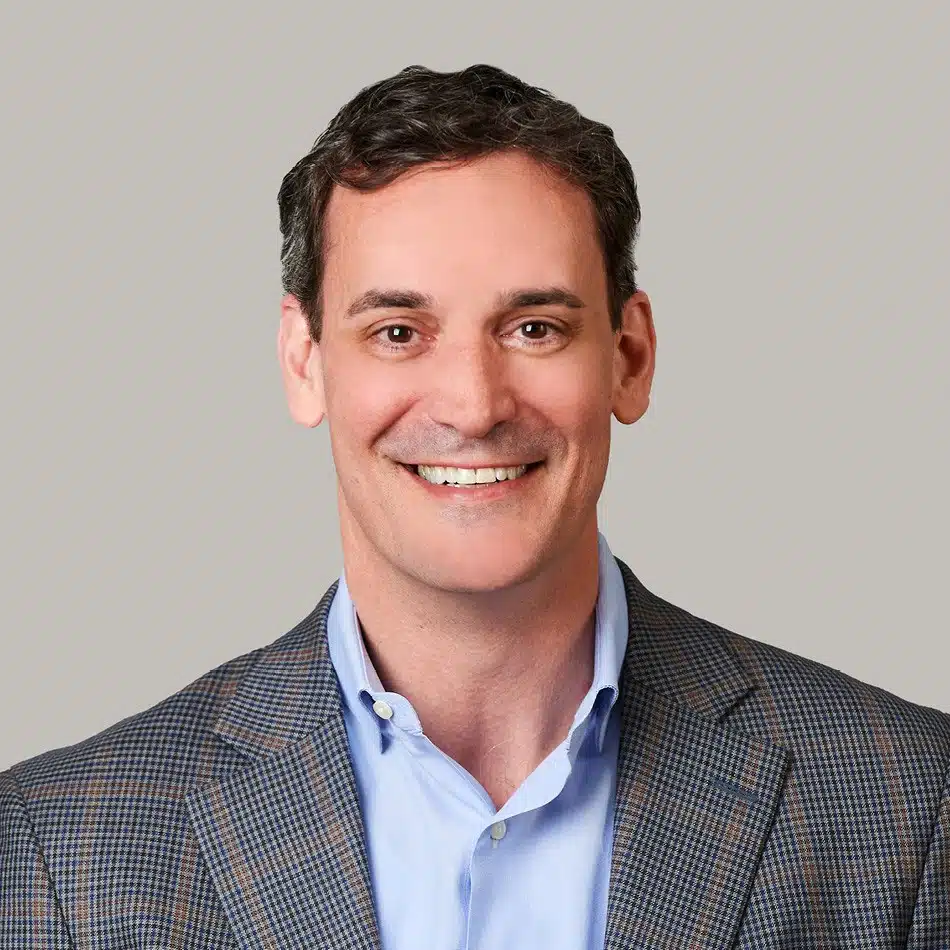
Kristin Andreski, CEO of Definiti, has seen this transformation firsthand. Today’s executives can no longer be narrowly specialized; they need fluency across service, technology, and strategy, along with a clear understanding of the regulatory and compliance demands that influence every major decision.
In this conversation with Financial Services Practice Partner David Speicher, Andreski offers her perspective on what’s changing in the retirement services market, what that evolution demands of leadership and talent, and why client and advisor experience remains the ultimate differentiator, even as technology continues to advance.
The New Shape of the Retirement Market
Dave: One of the reasons I’ve been drawn to the retirement services space is because it has become so dynamic. Six or eight years ago, it was just the steady 401(k) space; now it seems there’s something new every week – an innovation, a regulatory change, an acquisition, an investment. Between the market evolution and what that means for leaders and leadership, and the growing overlap now between wealth and retirement, how is that changing what it takes to lead and win?
Kristin: There is no question that wealth and retirement are converging. The greatest example is how many wealth advisors have entered the retirement plan space and vice versa. As a CEO of a retirement TPA, what draws most of my focus is the intersection of technology and innovation driven by the evolving client, participant, and advisor experience. That’s where health, wealth, and retirement can come together.
And that impacts our strategy. We’re not fintech, and we’re “not just” professional services. Technology influences everything we do. Technology deployed by a retirement services provider can enable better experiences and better support for advisors who focus in the retirement plan and wealth management space. We’re a people-focused, service-focused, technology-driven organization. And that has changed everything about the talent we’re looking for. I feel strongly that you can’t do one without the other. Our advisors and clients want personalized service. They want proactive expertise. But they’re also demanding a seamless and consistent experience.
Dave: When you think about that transition, whether it’s tech, regulatory change, or investors coming into the space, fast forward five years and share what you think will most reshape the retirement/TPA ecosystem?
Kristin: Two things. AI and consolidation. Regarding AI, I see general agreement in the market that it’s not an “if,” it’s a “when.” Leveraging AI to deliver a personalized, proactive service delivery model that is seamless, consistent, and efficient. AI is enabling us today, and over the next five years will enable much more.
The industry is innovating, determining where to deploy it. We all want to be more efficient, more effective. We’re a highly regulated, governed, compliance-driven solution, with great responsibility to get it right. We need to deploy it in the right places, and enhance the value we deliver on a day-to-day basis. Second: consolidation. With these dynamics in the marketplace, I believe we will continue to see consolidation as smaller firms might struggle to leverage tech in the same way.
Dave: I will generalize and say that, to some degree, manual processes remain common throughout the industry. While some firms are adopting the tech, others are slow to do so. It feels like the gap between where many firms are and where technology is going is growing.
Kristin: Yes, I agree, the gap is widening. Specialists are coming in to our space to assist. Many firms are focused on solving for specific use cases. They’re meaningful, but they end up being plentiful. For example, they provide point solutions for a process like plan implementation or data integration.
It can create challenges for smaller firms, as now they’re having to manage that. Many solutions, multiple integrations, the security, and the constantly changing environment. It can be a complicated delivery system, and leveraging too many point solutions could make you inefficient through another path.
This is adding to the consolidation we talked about. Smaller TPAs are looking at the opportunity ahead and asking: should we invest in talent, in the tech, in the infrastructure? Or should we join a broader organization that’s further down that path?
Dave: What do you think people outside the retirement industry misunderstand about where the market is heading?
Kristin: Advancing AI is critical and will enable better solutions if done responsibly. Having said that, it’s a relationship-driven business and the human element matters. Relationship matters.
Many solutions provided in the retirement plan space come with shared fiduciary responsibility. Tech can enable a lot, but I think people outside the retirement market can misunderstand that balance, and the importance of getting it right.
Leadership and Talent in a Changing Market
Dave: Do you think there are operational capabilities that will separate the most scalable platforms from the rest going forward?
Kristin: It’s the solution that delivers efficiently, seamlessly, and consistently, while also feeling local, personal, and proactive. That goes back to this idea of grow big, act small. Behave big in some ways – investing in scalable solutions, but act and deliver small. I believe that is where differentiation will happen. You need a scalable platform that is safe, cyber-ready, and future-proofed as best it can be, with investment to continue to innovate and improve.
We can’t lose sight of the expertise and the intimate service delivery that is required. I still need to feel like you know me, you care about me, and you know what’s going on with my plan, my participants, and my company. Differentiation will come from delivering both.
Dave: As you’ve built your team, have you leaned more toward industry veterans, or have you brought in leaders from adjacent sectors?
Kristin: Certainly a mix. Adjacent experience works, but I believe you need a balance. I do believe you need market experience at the table. You can bring in someone from an adjacency because they have solid industry experience around them.
Dave: I often see mid-market firms like Definiti operating with a controller or VP of FP&A as the senior finance professional. They don’t necessarily invest in a strategic CFO partner to help with the business. You chose to bring in a true CFO. What problem were you trying to solve with that, and what has a strategic CFO brought to Definiti as an organization?
Kristin: If you think about our strategy, which is to grow through acquisitions, grow organically through great service and an expanded sales and marketing effort, and modernize, it’s going to require more than just a CEO making decisions, and it certainly requires more than just a finance department ensuring we can pay for it. Everyone at the senior table is a business leader first, and a strategic CFO helps align, prioritize, and lead the business.
We’ve got to build a successful business that leads successfully into its next chapter. If you’re making a transition and you are betting on your growth, a strong CFO is one of the smartest decisions that a CEO or board can make.
Differentiation in a Commoditizing Market
Dave: In a commoditizing industry, where can companies still build real differentiation?
Kristin: First, being an expert at what we do. Leveraging technology to create seamless experiences and trusted relationships. We’re committed to this market and have continued to expand our offering, to offer more expertise. A great example of that is 3(16) solutions, Cash Balance, Pension Outsourcing, and Actuarial Consulting.
Dave: Talk to me about the data and analytics capability you’ve built. It seems to have augmented your decisioning process and evolved your commercial strategy.
Kristin: It was a very intentional hire. I came from a firm that was very fluent in data. Early on, I found relatively little focus on data in the TPA space. But data is core. It’s core to business performance and core to our ability to differentiate in client and advisor experience. Our sales operations hire was meant to start building those muscles. And we’re just getting started. There is a lot we can do with data in the TPA space.
Dave: If you were advising a growth-oriented retirement services firm today, what leadership capability will matter most in the coming years that many firms still underestimate?
Kristin: Given how much we’ve talked about technology, data, and AI, I would say capability in that space. Not all of us come with that background and experience, so you need to supplement your staff or your investment to make sure you have it.
Dave: With so much focus on technology and efficiency, what matters most to preserve?
Kristin: As much as we’ve talked about data and technology driving efficiency, especially in the TPA space, you must remain obsessed with the client and advisor experience. What we have been known for is the ability to deliver excellence in that intimate, small, personal, proactive way. You can never lose sight of that north star.
Insights in your inbox
Stay up to date on the latest trends and insights shaping the executive search landscape from JM Search’s Blog.